
Point the Cell Phone at Cattle and Let the AI Estimate the Weight of the Animal
Announcements
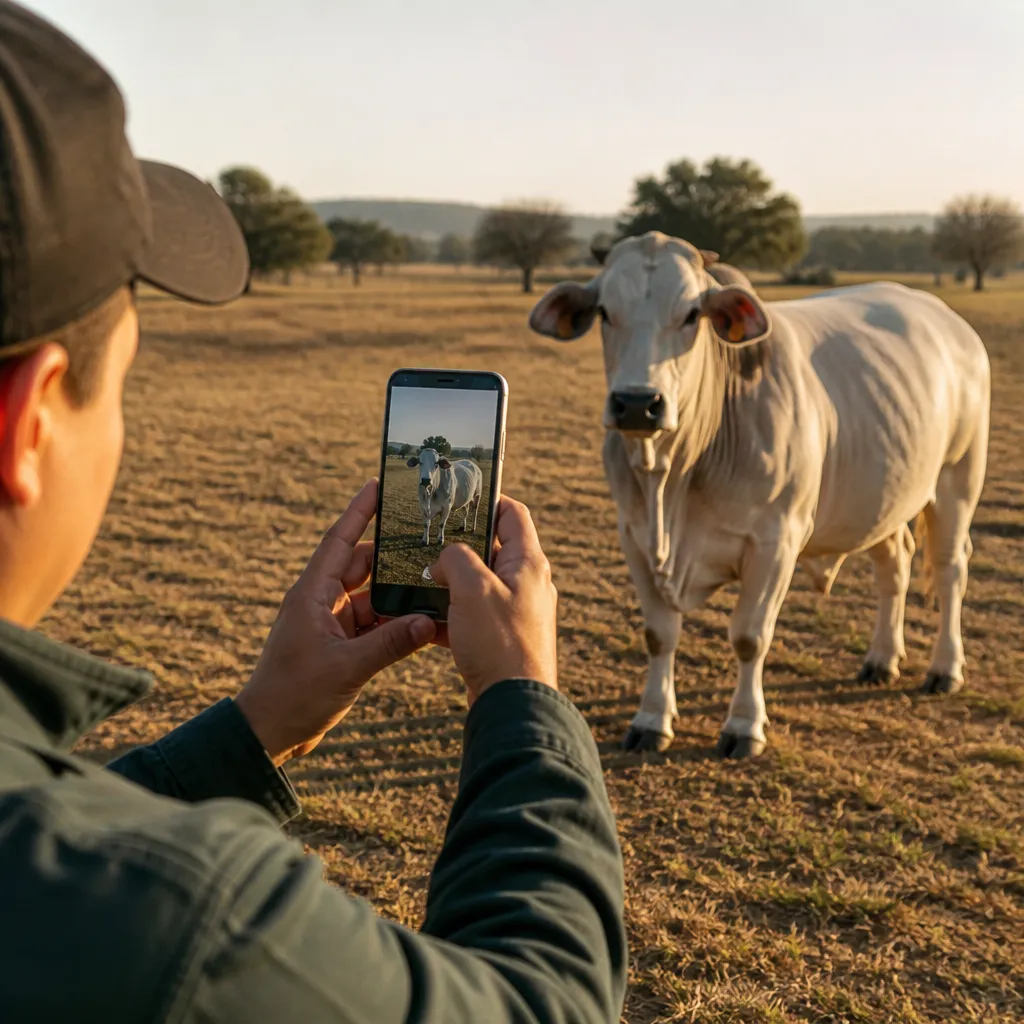
Artificial intelligence technology has come to the field in a practical and innovative way.You can now point the phone at an animal and let AI make an accurate estimate of its weight, revolutionizing the way ranchers evaluate the herd.
Announcements
This functionality, previously restricted to laboratories and advanced research, has become accessible to livestock farmers who need to monitor the health, development and business value of animals.The solution combines computer vision with machine learning algorithms to generate reliable results in seconds, without the need for scale or expensive equipment.
How AI Weight Estimation Works
The process is surprisingly simple and intuitive for those who use it for the first time. You open the application on the smartphone, point the camera at the animal at an appropriate distance, capture the image and the AI processes the information in real time. The system analyzes physical characteristics such as body length, height, chest width and overall conformation to calculate a fairly accurate weight estimate.
The artificial intelligence behind this technology has been trained with thousands of images of different bovine breeds, in varying lighting conditions and angles.This extensive training allows the algorithm to recognize visual patterns related to body mass, comparing the photographed animal with reference biometric data. The final result is displayed on your phone screen in a matter of seconds, allowing for quick decisions in the field.
Comparative: IA vs Traditional Methods of Evaluation
Conventional methods of estimating animal weight depend on fixed scales, experienced evaluators or mathematical formulas based on manual measurements. A traditional scale requires you to drive the animal to the equipment, which requires time, structure and energy from both the breeder and the cattle.In addition, the cost of installing and maintaining a quality scale is considerable for small and medium producers.
Visual assessment by specialists, a method still widely used, depends heavily on individual experience and is subject to interpretation errors. Each evaluator can reach slightly different conclusions about the same animal, compromising the consistency of management decisions. AI estimation eliminates this human variability, offering objective and reproducible numbers whenever you photograph the same animal under similar conditions.
Compared to traditional methods, the artificial intelligence-based solution offers greater portability, since any modern smartphone works as a tool. There is no need to move the herd to a specific location, which reduces animal stress and saves hours of work.The operating cost is minimal after downloading the application, making the technology economically advantageous even for breeders with limited budgets.
Practical Advantages in Herd Monitoring
Monitoring animal development is critical to ensure profitability and productive efficiency. With AI weight estimation, you can track the growth of each animal or specific groups without interruptions in routine management. This continuous data collection allows you to quickly identify those that are not developing as expected, enabling early interventions in nutrition or health.
Documentation of progress also becomes much more practical and organized.You capture the image, record the date and estimate is automatically stored on your phone. These photographic and numerical stories help make decisions about feeding, supplementation or even the disposal of unproductive animals. Breeders using this technology report greater accuracy in predictions of when an animal will be ready for sale or slaughter.
In addition to individual monitoring, AI allows aggregate analysis of the entire herd in a few minutes.You get information about average weight, weight distribution and variation within the animal population. These metrics help in nutritional planning, defining homogeneous lots for different purposes and negotiating with buyers, who value herds with predictable characteristics.
Choosing the Right Tool: What to Evaluate
Not all AI applications for weight estimation work with the same precision. When choosing which one to use, consider first the margin of error reported by the developer. Some tools guarantee accuracy of 95% or higher, while others may vary more under different conditions.
Compatibility with specific breeds is also important in your decision.Some applications have been trained mainly with European beef breeds and may underperform with local breeds or zebu, very common in Brazil.Seek information on which database was used to train AI and whether it includes common varieties in your herd.
Also evaluate the ease of use and the application interface. A system that is intuitive saves time and reduces frustration in the field. Consider whether the app works offline, allowing you to take photos without constant internet connection, or requires immediate upload to servers. The ability to export data, create reports and integrate with other agricultural management systems can make a difference in your workflow.
Available technical support is another deciding factor, especially if you encounter questions during use. Apps backed by consolidated companies or research institutions tend to offer better documentation and assistance.Leverage free versions or trial periods to validate that the tool really meets your needs before any financial investment.
Limitations and Realism with Technology
Despite impressive advances, AI for weight estimation is not foolproof and has limitations you should know. Factors such as inadequate lighting, poor capture angles, or animals too close or too far from the camera can compromise the quality of the estimate. If the animal is on its side or in a position that does not fully show its conformation, the end result may be less reliable.
Abnormal physical conditions, such as edema or swelling for any reason, can bias the calculation of AI, which interprets the silhouette as being larger than it really is. Very lean or obese animals may also present less accurate estimates, since AI has been trained with animals in more typical body conditions. Realism is key: use technology as a tool to support your judgment and experience, not as a complete substitute for them.
The quality of your smartphone’s camera also influences the results.More modern phones with better sensors and higher quality lenses tend to generate images that AI processes more accurately.If you’re using a very old device or with a damaged camera, you may suffer from inconsistencies in estimates.
Implementing the Solution in Your Routine
Starting to use this technology does not require complex training or drastic changes in your work system. The first step is to download the appropriate application on your smartphone and, if any, go through the initial tutorials that explain the correct way to photograph the animals.Depend a few minutes to test the tool with some known animals before fully relying on the results.
Establish a consistent monitoring routine, such as photographing the herd weekly or monthly at the same time of day and under similar conditions. Consistency in the data facilitates trend tracking and makes comparisons more valid. Organize your captures into folders or categories by batch, date or productive category, facilitating further analysis.
Integrate the information obtained with your existing management systems if the application allows data export. This integration creates a consolidated history that enriches your decision making. If there is no automatic integration, keep manual records of estimates in spreadsheets or documents, creating a database that you will consult for future decisions on the nutritional or commercial management of the herd.
Calibrate your expectations as you gain experience with the specific tool you choose. Recognize patterns of bias, such as whether it tends to overestimate or underestimate under certain conditions.This practical knowledge improves your interpretation of results and integrates it better into your consolidated workflow in the field.