
Cattle Scale: Precise and Practical Weighing
Announcements
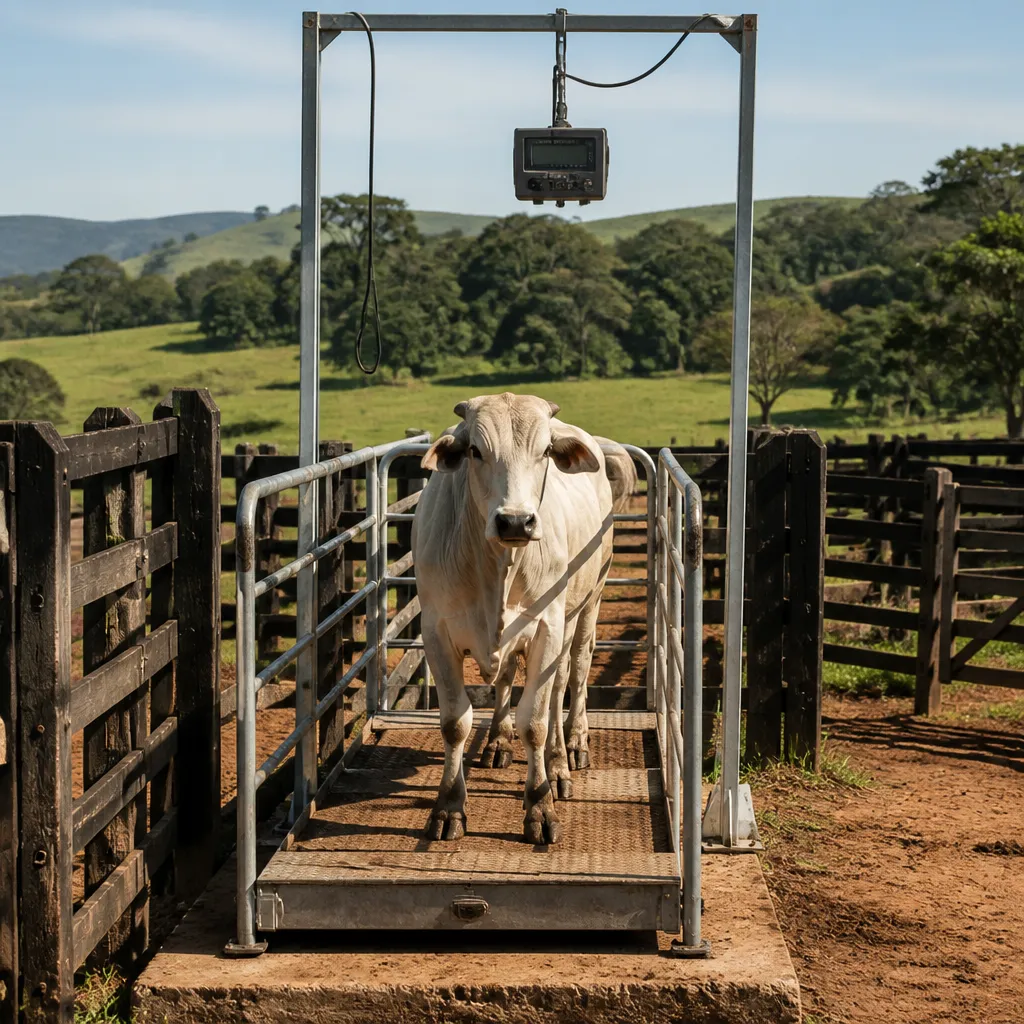
The cattle scale is an essential equipment for any producer working with beef or dairy cattle.It allows you to control the weight gain of animals, optimize food and make more assertive business decisions in herd management.
Announcements
You will notice that a good weighing is not just a matter of convenience: it directly impacts the profitability of the property, the health of animals and the quality of zootechnical records.In this article, we will explore how to choose, install and use a livestock scale in a practical and efficient way, considering the current trends of the livestock market.
Types of Cattle Scale and Their Applications
There are several categories of scales available on the market, each suitable for a specific type of operation. The electronic scale is the most common currently, offering accuracy of up to 1 kg and quick reading on the display. Already the mechanical scale remains reliable in properties that prefer equipment without dependence on battery or electricity, although with slightly lower accuracy. The choice depends on the size of your herd, the volume of weighings and the budget available.
Portable scales have gained ground in recent years, especially among producers working with various management points on the property. They allow weighing in different pens without the need for fixed infrastructure, providing operational flexibility. On the other hand, fixed scales, installed in a strategic location of the corral, offer greater precision and durability, being ideal for properties that make frequent and systematic weighing.
Essential Components of a Cattle Scale
An efficient scale needs some key elements to work well. The platform must have dimensions appropriate to the size of the animals, usually between 1.5 and 2.5 meters long, allowing the cattle to enter and remain stable during reading. The structure needs to be reinforced in steel or iron, as it supports loads of up to 1,500 kg or more, depending on the model and breed of the animals.
The weighing system, whether electronic or mechanical, must be calibrated regularly to ensure accuracy. Many producers neglect this maintenance, compromising the reliability of the collected data. The load cells, present in the electronic scales, are sensors that convert the weight into digital signals; any damage or accumulation of dirt reduces its efficiency. The control panel or display should be easy to read, with a clear screen and, ideally, resistant to moisture and dust typical of the rural environment.
Space Installation and Preparation
To install a livestock scale properly, you need to ensure a fully flat and compacted floor, without irregularities that cause oscillation in the readings. Most modern scales require a leveling of less than 2 degrees of slope to operate with maximum accuracy. If your property has rough terrain, it will be necessary to do a small work of infrastructure, creating a well-compacted concrete or crushed stone base.
Access to the scale should be facilitated by well-designed management corridors, allowing animals to enter without stress and leave after weighing in an orderly manner. The presence of natural light or adequate lighting is also important, as it facilitates the reading of the results and reduces the time of permanence of cattle on the platform. You should avoid installing the scale in places with too much light reflection or dynamic shadows, which impair the display visualization.
Current Trends in Cattle Balance
The livestock market is adopting integrated weighing systems, where the scale connects to zootechnical management software via Bluetooth or Wi-Fi. This trend allows you to automatically record weight, date and time data, eliminating manual annotations and reducing human errors. Producers using these platforms can track individual weight gain of animals, identify abnormal performances and adjust the feed more accurately.
Another growing practice is weight traceability over time, which is critical for quality certifications and access to premium markets. Large refrigerators and integrated production systems require reliable weight gain records to establish price charts and ensure compliance with international standards.If you intend to scale your operation or access new customers, investing in a scale with digitized recordability is strategic.
Regular Maintenance and Calibration
A well-maintained scale lasts many years and continues to provide reliable readings.You should do a routine cleaning of the platform, removing feces, urine and dirt that may affect the operation.If the scale is electronic, protect the control panel from rain and excess moisture with covers or small shelters.
Calibration should be performed annually or whenever you suspect inaccuracy.Many manufacturers offer calibration kits or provide the standard weights for this process.You can also hire specialized technicians to perform this maintenance, which is safer and ensures proper certification. Battery, cables and connections should be checked regularly on electronic scales, as they are critical points of failure.
Using Weighing Data in Decision Making
The data collected on the scale is valuable only if you analyze them and translate them into managerial actions. You should set daily or weekly weight gain goals for each batch or category of animal, adjusting the feeding according to the results. A calf in the breeding phase should gain between 800 grams and 1.5 kilograms per day; if the gain is below that, there is a problem that needs to be investigated (it may be poor food quality, parasites, disease or improper management.
Historically record the weights of each animal or batch to identify patterns and make comparisons between periods and crops. This practice allows you to calculate productivity indices, such as feed conversion and weight gain cost, essential for livestock profitability. Producers who use this data systematically can reduce operating costs by up to 15% to 20%, according to industry data.
Weighing is also key at the time of sale, ensuring you have control over weight in pre-slaughter or pre-weaning when value is negotiated. A reliable balance protects your business interests and avoids disputes with buyers over the exact amount of pounds delivered.